- The Money Maniac
- Posts
- 💰 Did Washington Spark A Gold Rush?
💰 Did Washington Spark A Gold Rush?
Gold and silver are ripping again. And this time, the move feels less like a trade... and more like a signal. In just the past two weeks, gold is up 7% to $4,600, while silver jumped 26% to $90.

Daniel Anderson
January 16, 2026
In partnership with

Good morning, Maniacs!
This week’s earnings reports have delivered a pretty clear message: the economy isn’t rolling over.
JPMorgan, Morgan Stanley, Bank of America, Citi, Wells Fargo, and Goldman all beat expectations once you strip out one-time charges. Delta reminded that the K-shaped economy is here to stay, as premium demand continues to outperform. And over in tech, TSMC posted 35% profit growth — proof that the AI trade is still booming.
Washington rolled out a tidal wave of affordability proposals, including mortgage bond purchases, interest rate caps, and… a little lawfare that’s already starting to backfire.
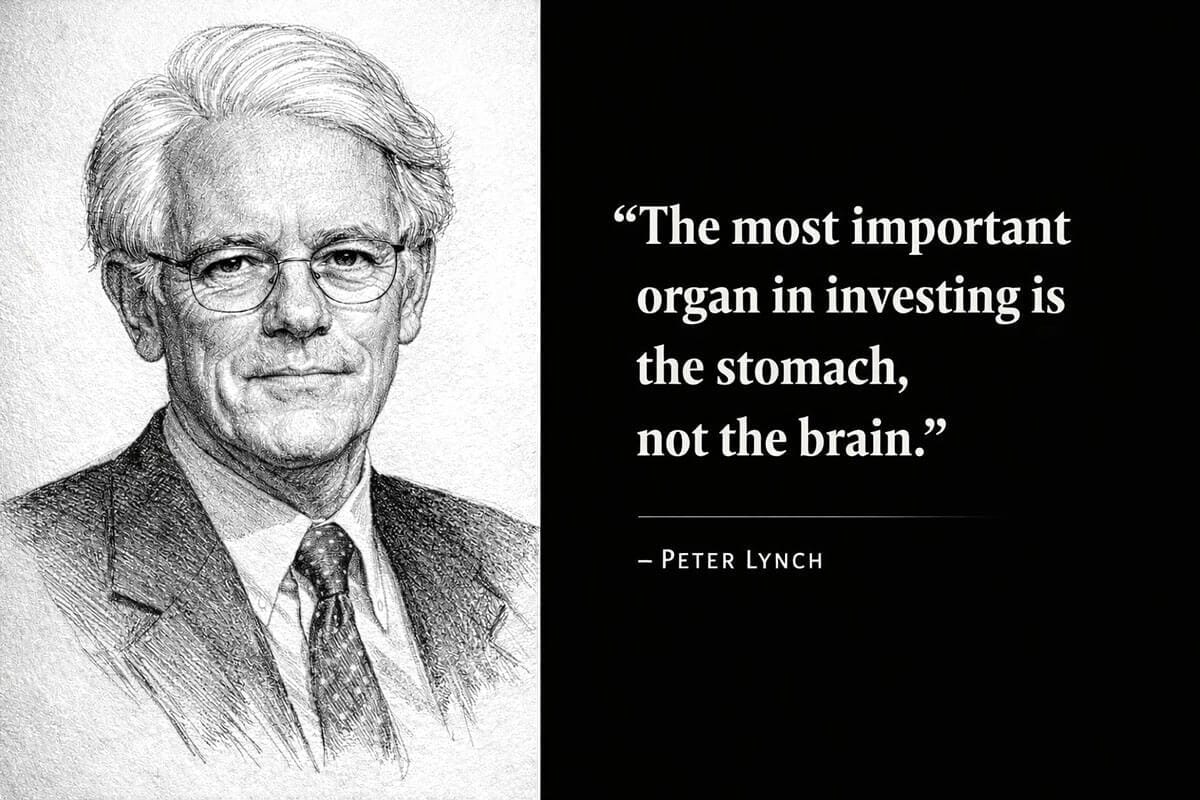
Plus, it turns out that investors who didn’t panic-sell after Liberation Day have doubled the returns of those who did. We’ll be revisiting that lesson in today’s Words to Remember.
Let’s dive in! 👇
OUR PARTNER: WISPR FLOW
Fast, accurate financial writeups

When accuracy matters, typing can introduce errors and slow you down. Wispr Flow captures your spoken thinking and turns it into formatted, number-ready text for reports, investor notes, and executive briefings. It cleans filler words, enforces clear lists, and keeps your voice professional. Use voice snippets for standard financial lines, recurring commentary, or compliance-ready summaries. Works on Mac, Windows, and iPhone. Try Wispr Flow for finance.
THE MAIN EVENT
When Institutions Shake, Precious Metals Shine ✨
Gold and silver are ripping again. And this time, the move feels less like a trade… and more like a signal.
In just the past two weeks, gold is up 7% to a record $4,600/oz, while silver jumped 26% to a record $90/oz. Of course, this builds on the monster 2025 in which gold and silver ran 65% and 147% respectively.
I’ve previously covered the usual suspects: central bank buying, a weaker dollar, and safe-haven demand. Those forces are still very much in play. But what’s changed recently is where the anxiety is coming from.
The Fed Factor
The latest move began after Fed Chair Jerome Powell confirmed the Department of Justice opened a criminal investigation into his testimony on cost overruns at the Fed’s headquarters renovation.
President Trump claims he had no knowledge of the case, while Treasury Secretary Scott Bessent said the DOJ's probe "made a mess" of the financial markets.
Nonetheless, Powell warned that the pressure campaign is jeopardizing the Fed’s independence.
The renovation in question?
👉 $2.5 billion for ~800,000 square feet (including parking)
That’s more than:
The Sphere in Las Vegas ($2.3B)
The Bills’ and Titans’ upcoming stadium budgets ($2.1B each, planned for 2026/2027)
Even the Burj Khalifa ($1.5B), the tallest building in the world
Given that context, the project does look hard to defend. Still, criminal charges are an extreme escalation — and in markets, the bigger story is the precedent
Investors aren’t concerned with drywall costs. They’re trading the risk that political pressure starts bleeding into monetary policy.
For investors, that raises uncomfortable questions:
What happens if rate decisions become politicized?
What happens to confidence in U.S. debt?
What happens to borrowing costs if credibility erodes?
When those questions show up, money tends to run toward assets that don’t require trust in institutions.
Why This Move May Have Legs
Rather than rehash the whole “why gold” list, here’s what matters looking forward:
1) Monetary easing isn’t done
Most central banks are expected to keep loosening into 2026, and lower rates reduce the opportunity cost of holding gold.
2) Political risk is sticking around
Tariffs, wars, debt, and central bank politics aren’t being resolved. In fact, they’re being layered, which keeps defensive trades relevant.
3) The gold bid can keep growing
Gold now accounts for 25% of global central bank reserves, the highest share in three decades. However, in the 1970s, gold made up 50 to 70% of reserves, so even a partial rhyme with history leaves room for further stockpiling.
4) Silver’s supply problem is getting louder
Silver is not just a hedge — it is an industrial input. EVs, solar panels, AI data centers, and reshoring are all colliding with tight supply and export restrictions. That’s why silver has been so explosive.
What the Forecasts Say
The price targets being floated today would’ve sounded insane two years ago. Now, they’re… oddly mainstream:
J.P. Morgan sees gold reaching $5,055 by Q4 2026, with a path toward $5,400 in 2027.
Yardeni Research raised its 2026 target to $6,000.
HSBC, Bank of America, and Goldman Sachs all cluster around $4,900–$5,000 for 2026.
Independent analysts are even bolder, with some calling for $7,000 gold and $100+ silver if supply deficits persist.
But not everyone is bullish.
David Oxley at Capital Economics warns this kind of momentum can cut both ways: rallies like this are “hard to justify,” and could see rapid price falls if retail/FOMO demand evaporates. That if is the big question, isn’t it?
One Last Confession 😅
Silver (and copper, for that matter) has real structural tailwinds, but it’s also volatile. It’s sensitive to tariffs, policy shifts, substitutions, and sudden demand shocks.
Gold, on the other hand, increasingly feels like a longer-term allocation as the world shifts from a U.S.-centric order toward something more fragmented and protectionist.
Which makes this next part sting a bit.
One of my bigger misses (other than selling Tesla in 2019) was my gold and silver trade. I bought them as an inflation hedge during the COVID money-printing era, watched them trade sideways for years, then sold in late 2023.
Oof. Roughly a 3x miss since then.
Which brings me to a question I’ve been wrestling with 👇
Should I trim my largest holding ($MSFT) to build a dedicated gold allocation? |
MARKET MOOD
Missiles Over Moderators 🧑💻

Winners
Lockheed Martin ($LMT) – Market Cap: $134.9B (5-day move: +11.5%)
Defense stocks caught a bid after Trump floated a $1.5T defense budget for 2027, up from ~$900B today. LMT also got a boost after L3Harris announced a deal with the Pentagon, highlighting Washington’s focus on missile capacity. With a massive backlog, next-gen systems exposure, and a cheaper valuation than peers, Lockheed checks a lot of boxes.
Figure Technology ($FIGR) – Market Cap: $13.9B (5-day move: +11.2%)
Wall Street is warming up to Figure’s blockchain-powered vision for transforming finance. Piper Sandler and Bernstein both raised price targets after loan volumes beat expectations by over 20%. Analysts see Figure’s profit growing quickly as it replaces “legacy banking pipes” with more modern infrastructure.
Losers
Atlassian ($TEAM) – Market Cap: $33.8B (5-day move: -14.0%)
Enterprise software sold off as investors questioned whether AI actually boosts revenue, or just efficiency. Fears around “agentic AI” reducing developer headcount hit Atlassian hard, given its per-seat model. The market’s current take? AI might shrink teams before it grows the top line.
Reddit ($RDDT) – Market Cap: $43.3B (5-day move: -9.9%)
Reddit fell as reports flagged weak ad demand from small businesses, despite stronger conditions for Meta and Google. Then came a gut punch: Digg’s relaunch, led by Reddit’s original founders, is reportedly siphoning off moderators and threatening Reddit’s community backbone.
OUR PARTNER: MASTERWORKS
3 Tricks Billionaires Use to Help Protect Wealth Through Shaky Markets

“If I hear bad news about the stock market one more time, I’m gonna be sick.”
We get it. Investors are rattled, costs keep rising, and the world keeps getting weirder.
So, who’s better at handling their money than the uber-rich?
Have 3 long-term investing tips UBS (Swiss bank) shared for shaky times:
Hold extra cash for expenses and buying cheap if markets fall.
Diversify outside stocks (Gold, real estate, etc.).
Hold a slice of wealth in alternatives that tend not to move with equities.
The catch? Most alternatives aren’t open to everyday investors
That’s why Masterworks exists: 70,000+ members invest in shares of something that’s appreciated more overall than the S&P 500 over 30 years without moving in lockstep with it.*
Contemporary and post war art by legends like Banksy, Basquiat, and more.
Sounds crazy, but it’s real. One way to help reclaim control this week:
*Past performance is not indicative of future returns. Investing involves risk. Reg A disclosures: masterworks.com/cd
CHART OF THE WEEK
Intel’s Comeback Breaks The $50 Barrier 📈

Intel just did something it hasn’t done in two years: break above $50 a share. And no, this isn’t a random dead-cat bounce. This rally has layers.
First, there’s Uncle Sam. Since the US government stepped in with funding and strategic backing, Intel has quietly started to feel… protected. Call it industrial policy, call it “too important to fail,” or call it a very large safety net. Markets love a good backstop.
Then came the headline fuel. Trump took a victory lap this week, claiming Intel’s stock “went very up, and very high,” and hinted that Apple and Nvidia followed the government in.
Nvidia actually did — it took a $5B stake last fall. Apple? No official partnership yet. But the comment was enough to kick speculation into high gear. Could Apple be a future customer?
Finally, Intel showed up big at CES last week. After years of delays and missed expectations, the company looked like a comeback candidate again.
Its new Panther Lake chips (Intel Core Ultra Series 3) are faster, more efficient, and pack better graphics. They excel in gaming, robotics, and healthcare, while delivering longer battery life.
Put it all together: government backing, renewed relevance, and just enough mystery around future customers. Intel didn’t just climb to a two-year high — it reminded the market it’s still in the game.
FAST FACTS
Washington Takes On The Affordability Crisis 🏛️
💳 10% credit-card cap rocks lenders: Trump floated a one-year 10% rate cap, slicing average APRs in half. Card issuers slid, BNPL stocks jumped, and banks warned that rewards and credit access could vanish. [Read]
💸 Mortgage rates get a nudge lower: Trump directed Fannie Mae and Freddie Mac to buy $200B in mortgage bonds, potentially cutting rates by 0.5%. Housing stocks popped on the news. [Read]
🏠 Home sales finally wake up: December home sales rose 5.1%, the biggest gain in nearly two years. Rates near 6.2% aren’t cheap, but they’re finally low enough to get buyers moving. [Read]
📉 Inflation cools, but won’t quit: December CPI held at 2.7% year-over-year, with core inflation at 2.6%, the lowest since 2021. Progress, yes — but still stubbornly above the Fed’s 2% target. [Read]
⚡ Big Tech picks up the power bill: Microsoft pledged to cover higher electricity costs tied to its data centers. The move aims to prevent local utility bills from surging and head off public backlash against AI. [Read]
🤖 Google beats OpenAI to Apple: Apple confirmed a multiyear partnership with Google to power Siri with Gemini. The deal is a credibility hit for OpenAI’s ChatGPT and reinforces Google’s newfound AI leadership. [Read]
WORDS TO REMEMBER
Why Guts Matter More Than Genius 🧠
Thanks For Reading!
How was today's email? |
Spread The Wealth 💸
Like what you read? Do me a favor and don’t keep it a secret! Send this newsletter to a friend and help them level up their financial game—one fact at a time.
Click the button above -or- copy and paste this link: https://read.themoneymaniac.com/subscribe?ref=PLACEHOLDER
DISCLAIMER: The information provided in this newsletter is for informational purposes only and should not be construed as financial advice or a solicitation to buy or sell any assets. All opinions expressed are those of the author and are subject to change without notice. Please do your own research or consult with a licensed professional before making any investment decisions.
MENTIONS: $LMT ( ▼ 0.21% ) $FIGR ( ▲ 4.41% ) $TEAM ( ▲ 0.71% ) $RDDT ( ▼ 7.67% ) $MSFT ( ▲ 1.04% )
Reply