- The Money Maniac
- Posts
- 💰 The Space Economy Reaches Escape Velocity
💰 The Space Economy Reaches Escape Velocity
NASA just launched a crewed lunar mission for the first time in more than 50 years. At the same time, SpaceX confidentially filed for what could become the largest IPO in history.

Daniel Anderson
April 03, 2026
In partnership with

Good morning, Maniacs!
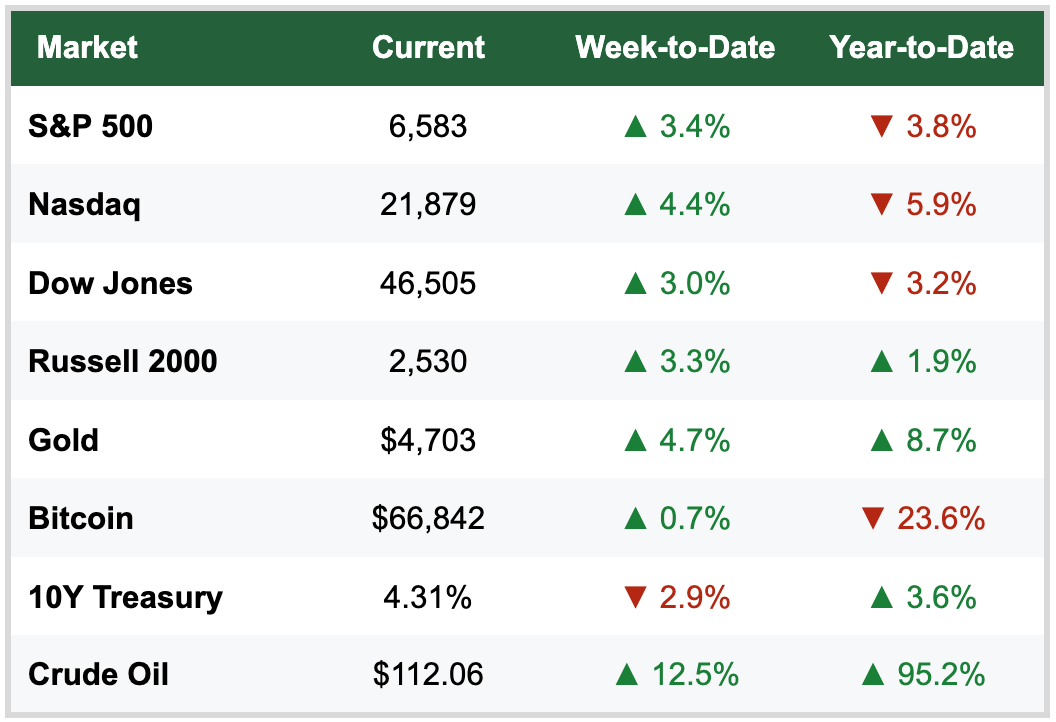
Despite a huge rally on Tuesday, the first quarter wrapped up with the S&P 500 posting its largest loss since Q3 2022. Stocks have since found some footing, snapping a five-week losing streak.
The rebound came as fears around the Strait of Hormuz eased just enough to calm investors. Yet, at the same time, oil saw its biggest spike since 2020.
Meanwhile, four astronauts are on their way to the moon for the first time in more than 50 years. And back here on Earth, SpaceX is gearing up for what could be the biggest IPO ever.
Today, we’re unpacking how space is shifting from a science project into a real economy, and what that means for investors.
Plus: gas is back above $4, a $14T bond wave is building, and the IRS is sending bigger checks this year.
Let’s dive in! 👇
OUR PARTNER: BELAY
Market Volatility Exposes Weak Delegation

When markets get shaky, advisors don’t just manage portfolios. They manage fear, questions, follow-up and a flood of client communication.
That’s where weak delegation gets expensive.
If meeting prep, paperwork, CRM updates and account admin still run through you, response times slip and the client experience takes the hit.
BELAY created the free Financial Advisor’s Delegation Guide to help you identify what to hand off, what to keep and how to stay client-facing without losing control.
Inside, you’ll learn how to reduce bottlenecks, protect responsiveness and free up more time for the work only you should be doing.
THE MAIN EVENT
The Space Economy Reaches Escape Velocity 🚀
It was a big week for space. And not the sci-fi kind. The real, investable kind.
NASA just launched a crewed lunar mission, sending astronauts on a path around the moon, for the first time in more than 50 years.

At the same time, SpaceX confidentially filed for what could become the largest IPO in history. Put those together, and you start to see the bigger picture.
Space is no longer just a science project. It is becoming an economy.
The Artemis Roadmap To The Moon
NASA’s Artemis program is the foundation of America’s return to the moon, and it is designed as a multi-step buildout rather than a one-off mission.
Artemis I (2022): Tested the rocket and spacecraft without a crew
Artemis II (2026): First crewed mission, looping around the moon
Artemis III (2027): Will test lunar landers built by SpaceX and Blue Origin
Artemis IV (2028): Expected to mark the first U.S. moon landing since 1972
Artemis V (2028): Early stages of moon base construction
This week’s Artemis II mission will cover nearly 700,000 miles, taking astronauts roughly 250,000 miles from Earth — the farthest humans have ever ventured.
This is not just about planting a flag. NASA is laying the groundwork for what it calls a “lunar economy” with research labs, infrastructure, and eventually even resource extraction.
But NASA is no longer doing this alone.
SpaceX And The Rise Of Private Space
NASA has spent more than $30B developing its rocket system and another $25B on the spacecraft used in Artemis II. Meanwhile, SpaceX has built a dominant launch business with just $12B in lifetime funding.
Now SpaceX wants to go public.
Potential IPO raise: up to $75B
Target valuation: $1.75T
Timeline: as soon as this summer
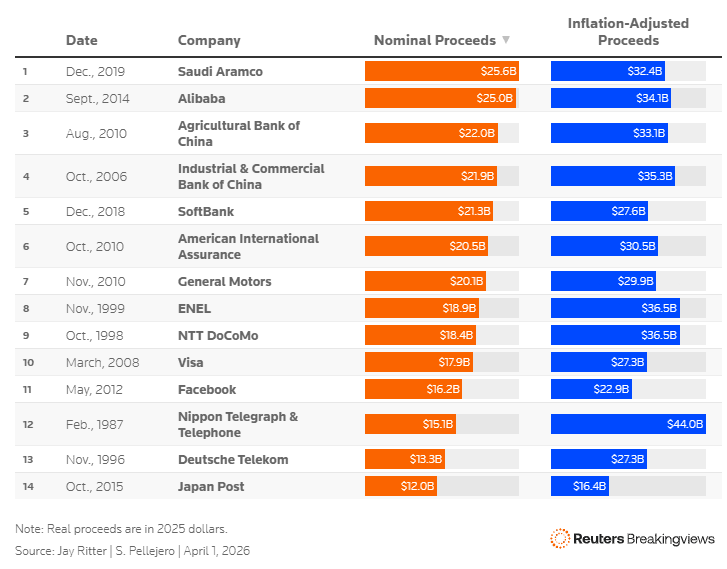
If that holds, this would be the largest IPO of all time, surpassing Saudi Aramco’s 2019 record. Plus, SpaceX would become the 8th largest public company in the world — larger than even Tesla.
This is not just a rocket company. SpaceX today looks more like a global infrastructure business:
Starlink accounts for 50% to 70% of revenue
9M+ users and 10,000 satellites in orbit
Government work now makes up only 5% of revenue, which shows how much the business has shifted toward commercial demand.
What The Space Economy Actually Includes
When investors talk about the space economy, they are usually referring to two layers of activity.
Today’s reality:
Satellite internet (Starlink)
Defense and surveillance
GPS and communications
Tomorrow’s potential:
Orbital data centers
Lunar mining and fuel production
Space-based manufacturing
The unlock for all of this is cost.
Over the past decade, SpaceX has already driven launch costs down from ~$20,000 per kg to ~$2,000 per kg. Its next goal is closer to $100 per kg.
If that happens, entire industries that once looked impossible suddenly become viable.
Why Investors Are Starting To Pay Attention
The combination of Artemis missions and the SpaceX IPO signals something important. Governments are building the roadmap, but private companies are building the businesses that sit on top of it.
We are already seeing early market reactions, with smaller space-related companies moving higher on the news.
Firefly ($FLY): +38.9% this week
Intuitive Machines ($LUNR): +36.9% this week
Planet Labs ($PL): +16.3% this week
Rocket Lab ($RKLB): +11.2% this week
That reflects a broader realization that increased activity in orbit creates demand for everything from satellites to launch services to infrastructure.
At the same time, it is worth keeping expectations in check. Many of the most ambitious ideas are still years away from generating meaningful revenue. For now, the bulk of the economic value is tied to satellite networks and communications.
Still, the direction is becoming clearer. As launch costs fall and activity increases, space is gradually turning into a place where companies operate, not just explore.
MARKET MOOD
Stocks Bounce, Snap 5-Week Losing Streak 😅
Winners
Lumentum ($LITE) - Market Cap: $59.0B (Week-to-Date: +17.7%)
Optical networking has become the AI trade’s next leg higher. Lumentum and Coherent keep ripping as demand for faster data movement picks up. Ever since joining the S&P 500, these two have been on an absolute heater. So I won’t say my recent coverage caused this move, but I also won’t rule it out. Hope you enjoyed the +18% follow-through.
Sandisk ($SNDK) - Market Cap: $103.6B (Week-to-Date: +13.9%)
Memory stocks got smoked last week after Google's research on a compression algorithm suggested AI models could use far less memory. The market took that and ran… a little too far. Turns out, the paper was a year old. More importantly, investors may have missed the bigger picture.
There’s a concept called Jevon’s Paradox: when something gets more efficient or cheaper, people end up using more of it. That’s exactly what could happen here.
Palo Alto Networks ($PANW) - Market Cap: $132.4B (Week-to-Date: +11.0%)
Cybersecurity hasn’t had much to cheer about lately, but a $10M stock purchase from CEO Nikesh Arora may have lifted the mood. It’s a reminder that the bigger picture hasn’t changed. If anything, AI may increase the need for cybersecurity, not replace it. More apps, more agents, more attack surfaces.
Losers
Nike ($NKE) – Market Cap: $65.4B (Week-to-Date: -14.0%)
Nike beat earnings, but that wasn’t the story. Guidance was. The company now expects sales declines ahead, with China down 20% next quarter and margins getting squeezed by tariffs and rising costs. The market didn’t stick around to hear the rest. The stock is now sitting at a 12-year low, down 67% over five years.
McCormick & Company ($MKC) – Market Cap: $13.1B (Week-to-Date: -8.0%)
McCormick did what you’d want on paper: beat earnings and raised guidance. Then it announced a massive deal to acquire Unilever’s food business (valued at $44.8B). The problem? Big food mergers don’t have a great track record, and this one comes with nearly $16B in debt. Management is selling long-term upside, but the market is focused on execution risk.
Beyond Meat ($BYND) – Market Cap: $0.3B (Week-to-Date: -7.8%)
Beyond Meat is dealing with weak demand, falling volumes, and now accounting issues. Revenue missed expectations, guidance came down, and the company delayed its annual report due to inventory-related errors. As the CFO put it, the category is “very volatile, and volumes remain soft.” The stock has fallen 99% since IPO.
OUR PARTNER: PERCENT
Institutions Aren't Guessing. Neither Should You.

94% of institutional investors now allocate to private credit (Nuveen, 2025). Percent gives accredited investors direct access to private credit: 16.72% current weighted average coupon, terms as short as 3 months, starting at $500. $1.82B funded since 2018. New investors can receive up to $500 credit.
Alternative investments are speculative. Past performance not indicative of future results. Terms apply.
CHART OF THE WEEK
The $14T Debt Tsunami Nears Shore 🌊
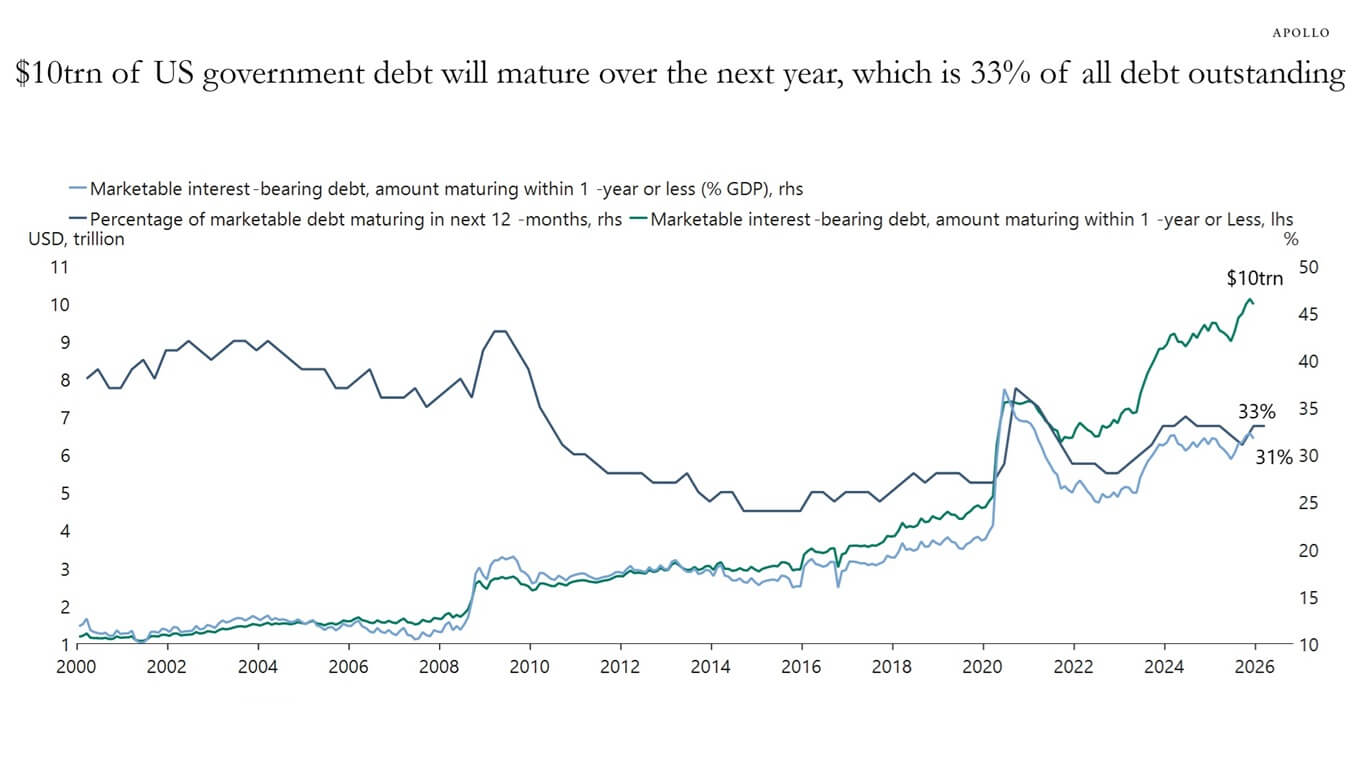
The next big move in bonds isn’t about demand. It’s about supply.
Roughly $10T of existing U.S. government debt needs to be refinanced in the next year. Add in a $1.9T deficit and $2.5T in corporate borrowing, and you’re looking at a flood of supply hitting the bond market.
More supply = lower prices. And in bonds, lower prices mean higher yields.
What that means for you:
Rates may stay higher for longer: All these new bonds need buyers, so yields have to rise to attract them.
Long-term bonds face pressure: If rates rise, existing bonds (which pay lower yields) lose value, especially 10+ year ones.
Time horizon matters: Remember that if you hold a bond to maturity, you still get paid. So price swings only matter if you sell.
Cash gets more attractive: Short-term Treasuries and money markets benefit as yields reset higher.
Bottom line: You don’t need to avoid bonds today. This is just a reminder that the coming wave of supply could push yields higher over the next year, with longer-term bonds likely to feel the most pressure first.
FAST FACTS
The IRS Giveth, Gas Stations Taketh ⛽
💸 Blue states get the biggest refunds: California refunds are up 21% this season versus 11% nationally, as Trump’s SALT cap hike sends some of the biggest tax breaks to high-income households in blue states. [Read]
😢 Gas is back above $4: The national average just crossed $4.00 a gallon for the first time since 2022, while diesel is up 45%, threatening to raise shipping and grocery costs next. [Read]
🧾 The wealth-tax bar keeps dropping: Elizabeth Warren’s latest plan would hit fortunes above $50M with a 2% annual tax. At this rate, wealth taxes are starting to creep up on the 401(k) millionaire crowd. [Read]
🚕 Waymo hits 500,000 weekly rides: Alphabet’s robotaxi unit is now doing half a million paid trips a week across 10 cities, up 10x from two years ago. [Read]
🏚️ House flipping loses its shine: The average flip made just $66K last year, the weakest profit since 2008. [Read]
🔐 Quantum closes in on crypto: Google researchers now see a 10% chance that quantum machines could crack blockchain encryption by 2030, putting roughly 6.7 million Bitcoin at risk unless the network upgrades in time. [Read]
💊 Lilly brings weight loss to a pill: The FDA approved Eli Lilly’s Foundayo, the first oral GLP-1 for weight loss with no food or water rules. [Read]
WORDS TO REMEMBER
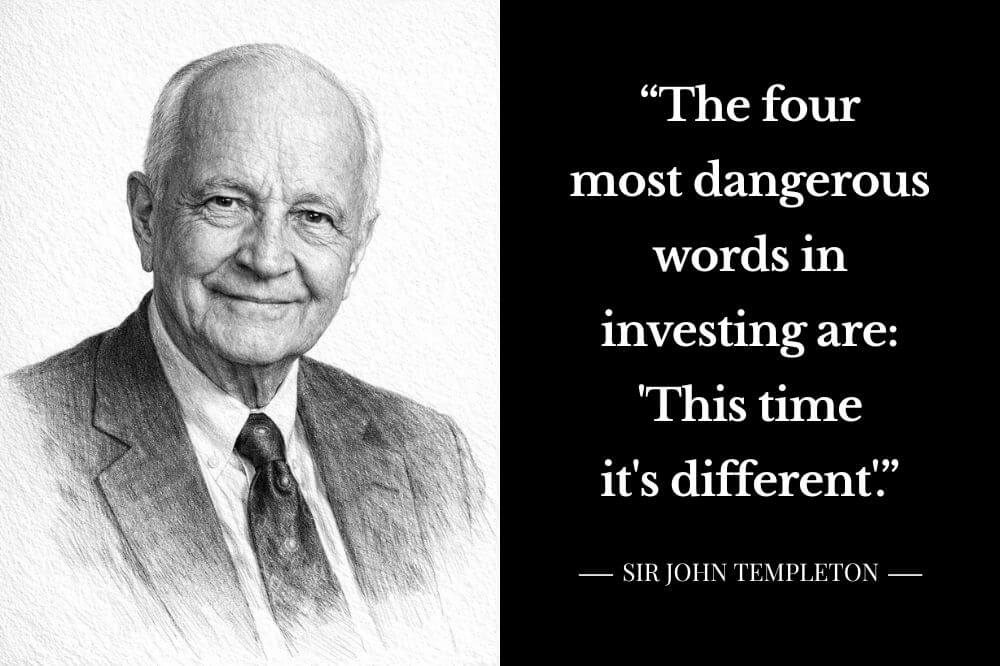
The Lie Investors Love To Believe 🧠
Thanks For Reading!
How was today's email? |
Spread The Wealth 💸
Like what you read? Do me a favor and don’t keep it a secret! Send this newsletter to a friend and help them level up their financial game—one fact at a time.
Click the button above -or- copy and paste this link: https://read.themoneymaniac.com/subscribe?ref=PLACEHOLDER
DISCLAIMER: The information provided in this newsletter is for informational purposes only and should not be construed as financial advice or a solicitation to buy or sell any assets. All opinions expressed are those of the author and are subject to change without notice. Please do your own research or consult with a licensed professional before making any investment decisions.
MENTIONS: $LITE ( ▼ 0.45% ) $SNDK ( ▼ 0.51% ) $PANW ( ▲ 0.97% ) $NKE ( ▲ 0.17% ) $MKC ( ▲ 0.64% ) $BYND ( ▲ 17.7% )
Reply